Basic Information
| Field | Details |
|---|---|
| Full name | Elizabeth Harrison Walker |
| Birth | February 21, 1897, Indianapolis, Indiana |
| Death | December 25, 1955, New York City |
| Age at death | 58 |
| Resting place | Locust Valley Cemetery, Locust Valley, New York |
| Parents | Benjamin Harrison 1833-1901, 23rd U.S. President; Mary Dimmick Harrison 1858-1948 |
| Half-siblings | Russell Benjamin Harrison 1854-1936; Mary Harrison McKee 1858-1930 |
| Spouse | James Blaine Walker Jr. 1889-1978, married April 6, 1921 |
| Children | Benjamin Harrison Walker 1921-1995; Jane Harrison Walker 1929-2020 |
| Education | Tudor Hall School; Westover School; New York University School of Law JD 1919; liberal arts at Washington Square College |
| Legal admissions | Indiana Bar and New York Bar, both at age 22 |
| Notable roles | Secretary and sole female officer, Committee for Economic Development; founder, publisher, and editor of Cues on the News investment newsletter; Town Hall, Inc. trustee |
| Public engagements | Radio and television commentator on economics for women; war relief organizer |
| Distinction | Among early 20th century women admitted to practice law in two states |
Origins and Early Life
By 1897, Elizabeth Harrison Walker was born into history’s front parlor, but her family had left the White House. Her father, former President Benjamin Harrison, was 63 when she arrived and died at four. A daughter carrying a miniature apple pie to a dying father was a touching scene. Domestic sparks set the tone for a lively, determined life.
Her first classroom was Indianapolis. After her sophomore year at Tudor Hall School, Margaret and her widowed mother moved east to New York City in 1913. She studied at Westover School in Connecticut and traveled Europe, like many rich young Americans at the turn of the century. Travel and transplants honed a practical intellect that focused on law.
Legal Education and Early Practice
New York University School of Law graduated Elizabeth in 1919. She became a more well-rounded lawyer by taking liberal arts courses at Washington Square College. She passed the Indiana and New York bars at 22, an achievement at a time when women attorneys were rare. As a young professional, she moved seamlessly between her Midwest roots and New York’s financial and cultural hub.
Her legal work unfolded in an era when courthouse corridors were almost entirely male. She proved the exception, not merely entering the profession but doing so across two jurisdictions and stepping quickly into public-facing roles that drew on her analytical training.
Preparedness, Public Service, and Economic Thought
Elizabeth was public-spirited before law school. She attended a 1916 Emergency Services Corps training camp in New Jersey, which taught women rifle shooting, signaling, horseback riding, trekking, and first aid. The curriculum showed her grit and civic curiosity early on.
She was secretary of the increasingly prominent civic entity Committee for Economic Development, which planned postwar activities, during and after World War II. She was its sole female officer. Her presence brought legal rigor and public awareness to rooms that penned the early playbook for the American economy’s postwar shift.
She frequently discussed women’s economic issues on radio and TV. The mic fit her. She translated abstractions into household realities, connecting bond yields to grocery budgets in crisp, memorable language. Her board membership in Town Hall, Inc., a civic forum, strengthened her function as a liaison between expert policy discussion and the public square.
Publisher for Women Investors
Elizabeth’s most successful work was Cues on the News, a monthly investment newsletter for women. The countrywide bank distribution demystified markets for readers who were generally excluded from financial conversations. Her title reflected her approach: brief advice based on current events for women’s savings, inheritances, and retirement plans.
Cues on the News educated women to read data rhythms instead than tickers. She brought editorial clarity and assurance to legal training. Her newsletter was a toolkit and a support for women working and managing houses throughout wartime.
Family Ties Across Presidencies
Elizabeth linked three strong American families. She was born to President Benjamin Harrison and Mary Dimmick Harrison. She married into Blaine family. Her descendants met the Garfields through her daughter’s marriage. From politics, service, and upward mobility, the tapestry is as American as a family patchwork.
| Connection | Figures |
|---|---|
| Father | Benjamin Harrison, 23rd President of the United States |
| Mother | Mary Dimmick Harrison, niece of Caroline Scott Harrison |
| Husband | James Blaine Walker Jr., grandnephew of statesman James G. Blaine |
| Daughter’s marriage | Jane Harrison Walker married Newell Garfield Jr., grandson of Interior Secretary James Rudolph Garfield and great-grandson of President James A. Garfield |
These alliances were not just genealogical curiosities. They shaped expectations, opened salons and boardrooms, and created a multigenerational commitment to public engagement.
Children and Later Generations
Elizabeth and James Blaine Walker Jr. married on April 6, 1921, in New York. They built their family in the city and remained married until her death in 1955.
- Princeton and Harvard Law graduate Benjamin Harrison Walker 1921-1995 was a U.S. pilot. Army Air Corps during WWII and then became Equitable Life Assurance Society chief counsel. He and Elizabeth Sillcocks Walker had two sons, James Harrison Walker and Benjamin Harrison Walker II.
- Jane Harrison Walker 1929-2020 fought quietly for medicine. She was one of two women in her Cornell Medical School class after The Chapin School and Bryn Mawr College. She directed Bellevue Hospital’s pulmonary clinic, developed early tuberculosis therapies, and led Mobil Oil’s international medical department. Her practice expanded to Maine and the Bahamas. She married Newell Garfield Jr. in 1961 and became stepmother to his four children and mother to Eliza Garfield. Eliza adopted Nepalese daughter Sirjana in 2008.
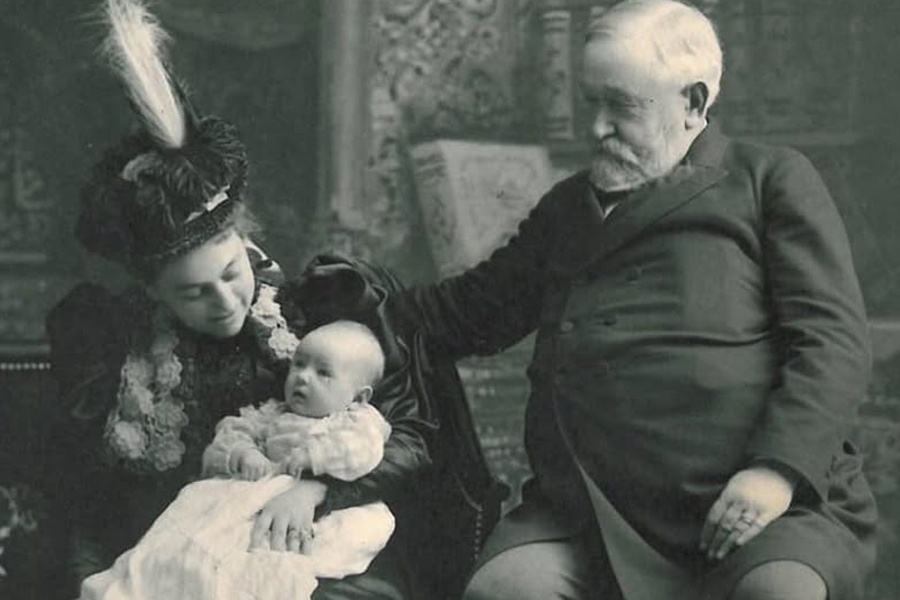
Some photographs remain: grandkids celebrating, a grandson planting a tree in 2008 to memorialize an 1895 event, and Harrisons and Garfields mixing at family anniversaries. Family branches expanded in public and private directions, reminding us that legacies are lived as much at kitchen tables as in history books.
Timeline at a Glance
| Year | Event |
|---|---|
| 1897 | Born in Indianapolis on February 21 |
| 1901 | Father dies on March 13; she is four |
| 1913 | Moves to New York City with her mother after Tudor Hall School |
| 1916 | Trains at an Emergency Services Corps camp in New Jersey |
| 1919 | Earns law degree from NYU; admitted to Indiana and New York bars at 22 |
| 1921 | Marries James Blaine Walker Jr. on April 6; son Benjamin born |
| 1929 | Daughter Jane born |
| 1930s-1940s | Practices law; becomes secretary and sole female officer of the Committee for Economic Development |
| 1940s | Launches Cues on the News investment newsletter; appears on radio and television; joins Town Hall, Inc. board |
| 1948 | Mother Mary Dimmick Harrison dies; family gathers in Indianapolis |
| 1955 | Dies in New York City on December 25; buried in Locust Valley Cemetery |
Final Years and Public Memory
On Christmas Day 1955, Elizabeth died in her New York apartment. The only surviving child of President Benjamin Harrison, she was 58. Records show her interment in Locust Valley Cemetery on Long Island, however it is unmarked or sunken. History’s quieter nooks can hold incredible stories like hers.
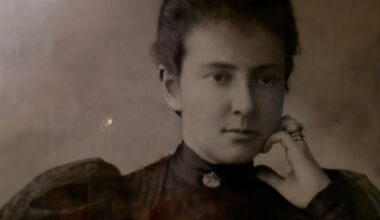
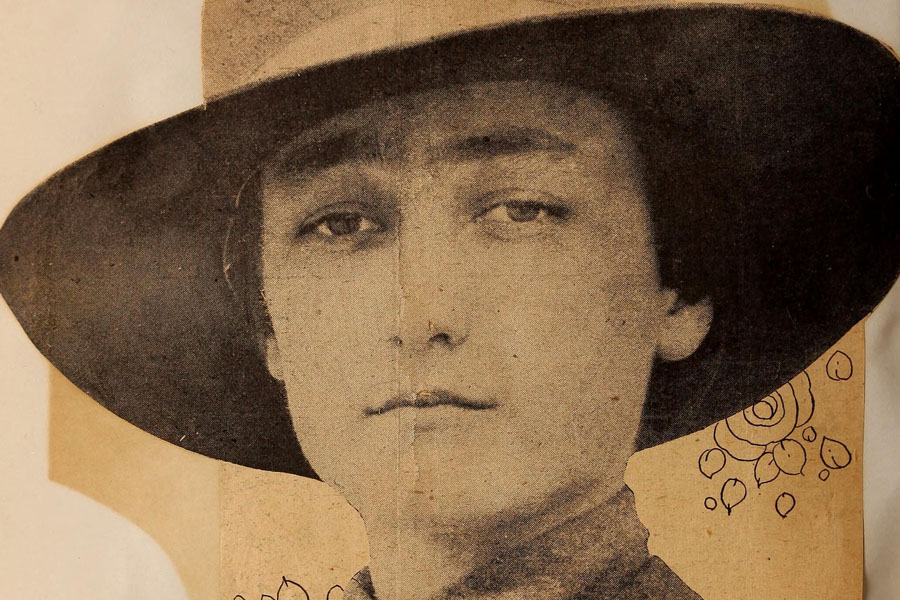
In recent decades, her name appears in presidential sites, family gatherings, and internet lineages. A composed woman with a steady look, a lawyer who spoke to women on radio mics, and a publisher who discussed stocks and bonds with women are photographed. She is remembered in public square posts and programs and in family life affected by her example.
FAQ
What made Elizabeth Harrison Walker a pioneer?
She earned a law degree in 1919 and was admitted to the bars of Indiana and New York at 22, entering a profession with very few women.
What was Cues on the News?
It was her monthly investment newsletter for women, distributed through banks nationwide and written to make markets understandable and useful.
How was she connected to other presidential families?
By birth she was Benjamin Harrison’s daughter; by marriage her descendants linked to the Blaine and Garfield families.
What roles did she hold during and after World War II?
She served as secretary and only female officer of the Committee for Economic Development and became a frequent economic commentator on radio and television.
Where is she buried?
She is buried in Locust Valley Cemetery in Locust Valley, New York, with an unmarked or sunken grave.
Did she have children and grandchildren?
Yes, two children, Benjamin and Jane, and several grandchildren, including James Harrison Walker, Benjamin Harrison Walker II, and Eliza Garfield, plus a great-granddaughter, Sirjana, adopted in 2008.