Growing Up Between Astor Wealth and Knickerbocker Prestige
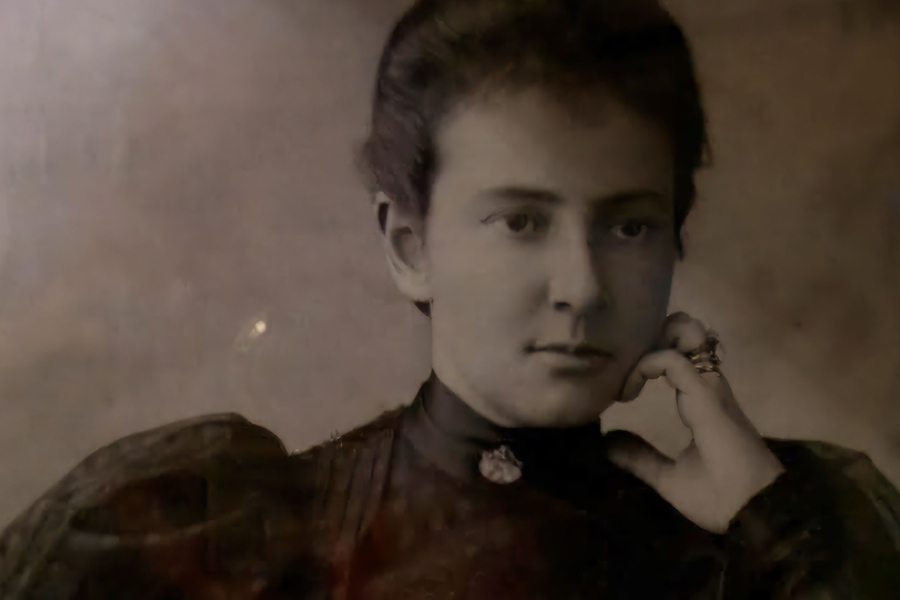
When I follow Helen Schermerhorn Astor Roosevelt’s life, I see a lady who was born into a milieu that shone like polished silver yet frequently hid her own vulnerability. On November 27, 1855, she was born in Manhattan, surrounded by her mother, Caroline Webster Schermerhorn Astor, also referred to as Mrs. Astor, and the vast wealth of the Astor dynasty. Although her father, William Backhouse Astor Jr., preferred the quiet rhythm of the sea to the cacophony of society, his fortune kept the family among the most influential in America.
I picture her early years taking place in a variety of spectacular locations. She was at the heart of New York’s elite society, living in a brownstone. Rhinebeck’s Ferncliff provided peaceful pastoral surroundings. The Gilded Age customs were put on full display at Beechwood in Newport. These houses were more than just places to live. Like skillfully positioned chess pieces throughout the social board, they served as symbols of authority.
However, Helen seems to have lived more peacefully than many of her relatives, even in this glittering setting. Helen stood just behind the curtain, present but not always performing, as her mother curated the renowned Four Hundred, establishing who belonged in society.
Parents Who Shaped a Social Empire
I cannot understand Helen without understanding her parents. Her father, William Backhouse Astor Jr., carried the legacy of John Jacob Astor’s real estate empire. He was wealthy beyond measure, yet personally reserved. His life tells me that wealth does not always seek attention.
Her mother, however, was the opposite. Caroline Webster Schermerhorn Astor ruled New York society with precision. Invitations were currency. Presence meant power. I see Helen growing up under this influence, learning the unspoken rules of status, reputation, and control.
This duality must have shaped her deeply. One parent withdrew from public life, the other commanded it. Between them stood Helen, absorbing both silence and spectacle.
Siblings and the Weight of Family Legacy
Helen was one of five children, each carrying a piece of the Astor legacy. Her older sister Emily Astor lived briefly, dying in childbirth in 1881. Charlotte Augusta Astor navigated marriage and divorce before remarrying. Caroline Schermerhorn Astor, known as Carrie, carried forward the social prominence of their mother.
Then there was John Jacob Astor IV, perhaps the most famous sibling. His life as a businessman and inventor ended tragically in 1912 aboard the Titanic. When I think about Helen, I realize she never witnessed this loss. Her life ended earlier, sparing her from that particular grief, though not from others.
These siblings formed a constellation of privilege and tragedy. Each story adds weight to the Astor name, and Helen’s story sits quietly among them.
Marriage Into the Roosevelt Family
On November 18, 1878, Helen married James Roosevelt, often called Rosy. This union fascinates me because it linked two powerful American families, the Astors and the Roosevelts. It was not merely a marriage. It was an alliance, a bridge between wealth and political lineage.
Rosy was the half brother of Franklin D. Roosevelt, who would later become president. At the time, he was a diplomat and a man of charm, moving easily through both American and European circles. Their marriage placed Helen in an international sphere, far from the drawing rooms of New York.
I picture their wedding at Grace Church, followed by a reception at the Astor mansion. It must have been an event of immense attention, a moment when society paused to witness the joining of two dynasties.
Children and a Complicated Legacy
Through her two children, Helen’s influence persisted into the 20th century.
Both money and expectations were passed down to her son, James Roosevelt Jr., often known as Tadd. He supposedly inherited a substantial sum of money—roughly $1.5 million—after Helen passed away in 1893. However, his family was startled at the course his life followed. He wed Sadie Messinger, a working-class woman connected to New York’s nightlife, in 1900. Family expectations were destroyed by this choice.
This is a rupture, in my opinion. Eventually, his father disowned him after attempting to dissolve the marriage. The Astor and Roosevelt families kept their distance from one another. Tadd’s life was characterized by seclusion, sporadic legal issues, and ultimately quiet oblivion. He stayed married to Sadie until her death in 1940 in spite of everything. He donated a large portion of his residual wealth to the Salvation Army near the conclusion of his life.
Helen Rebecca Roosevelt, Helen’s daughter, took a more conventional route. In 1904, she wed Theodore Douglas Robinson, reuniting her with the wider Roosevelt family. Her life seems more stable, based on consistency rather than disobedience.
Life Abroad and Diplomatic Circles
As the wife of a diplomat, Helen spent significant time in Europe. London became one of her final residences. I imagine her life there as both refined and isolating. She was far from the familiar structures of New York society, yet still bound by its expectations.
Her husband served in important diplomatic roles, including positions in Vienna and London. While he represented American interests abroad, Helen managed the quieter responsibilities expected of her role. She hosted, observed, and maintained the dignity of her family name.
Yet beneath this polished exterior, signs of illness began to appear.
Illness and an Untimely Death
Helen’s life ended on November 12, 1893, in Chelsea, London. She was only in her thirties. Accounts describe her as thin and unwell in her final months. The reported cause of death was a laudanum overdose, a substance commonly used at the time for pain relief.
When I reflect on this, I see a stark contrast between her privileged life and her vulnerable end. Laudanum was both medicine and danger, a reminder that even wealth could not shield someone from suffering.
Her death came just one year after her father’s passing. Her mother, already burdened with loss, continued to lead society for years afterward. Helen was buried in Hyde Park, New York, returning in death to the landscape tied to her husband’s family.
Finances and Inheritance
Instead of pursuing her goals on her own, Helen’s financial life was influenced by her inheritance. Her father set up a trust for her before to her marriage. The intricacy of managing enormous riches across generations was reflected in the legal proceedings surrounding her estate after her death.
One of the most talked-about parts of her financial legacy was her son’s inheritance. The sum, which was noteworthy at the time, symbolized Astor’s ongoing power in addition to money.
Her money, in my opinion, was a part of a bigger system in which riches moved like a river through family lines, influencing lives but not necessarily providing stability.
A Life Remembered Through Family
Helen Astor Roosevelt does not stand out for public achievements or dramatic social leadership. Instead, her life is remembered through the powerful networks she inhabited. She was a daughter of the Astors, a wife of the Roosevelts, and a mother whose children carried both honor and controversy.
Her story feels like a quiet thread woven into a grand tapestry. It does not dominate the pattern, yet without it the full picture would be incomplete.
Timeline of Key Events
I find it helpful to see her life as a sequence of moments:
- 1855 Born in Manhattan
- 1878 Married James Roosevelt
- 1879 Birth of her son Tadd
- 1881 Birth of her daughter Helen Rebecca
- 1892 Death of her father
- 1893 Death in London
Each date marks a shift, a turning point in a life that moved between privilege and fragility.
FAQ
Who were Helen Astor Roosevelt’s parents
Helen was the daughter of William Backhouse Astor Jr., a wealthy real estate heir, and Caroline Webster Schermerhorn Astor, the leading figure of New York high society.
How was she connected to the Roosevelt family
She married James Roosevelt, making her the sister in law of Franklin D. Roosevelt through her husband.
Did Helen Astor Roosevelt have children
Yes, she had two children, James Roosevelt Jr. known as Tadd, and Helen Rebecca Roosevelt.
What is she most known for
She is primarily known for her connection to the Astor and Roosevelt families and her place within Gilded Age society.
How did she die
She died in 1893 in London, with her death commonly attributed to a laudanum overdose during a period of illness.
What happened to her son Tadd Roosevelt
Her son married against family expectations, was disowned, and lived a largely isolated life, later leaving much of his fortune to charity.
Where is she buried
She is buried at Saint James Episcopal Churchyard in Hyde Park, New York.